The twelve houses of a birth chart
The houses are twelve areas of life in a birth chart. They are numbered 1 to 12 counter-clockwise from the Ascendant. Their positions depend on birth time and place, while a house system sets where each house begins. Astrology reads them as symbolic areas for reflection, not as proof or fixed predictions.
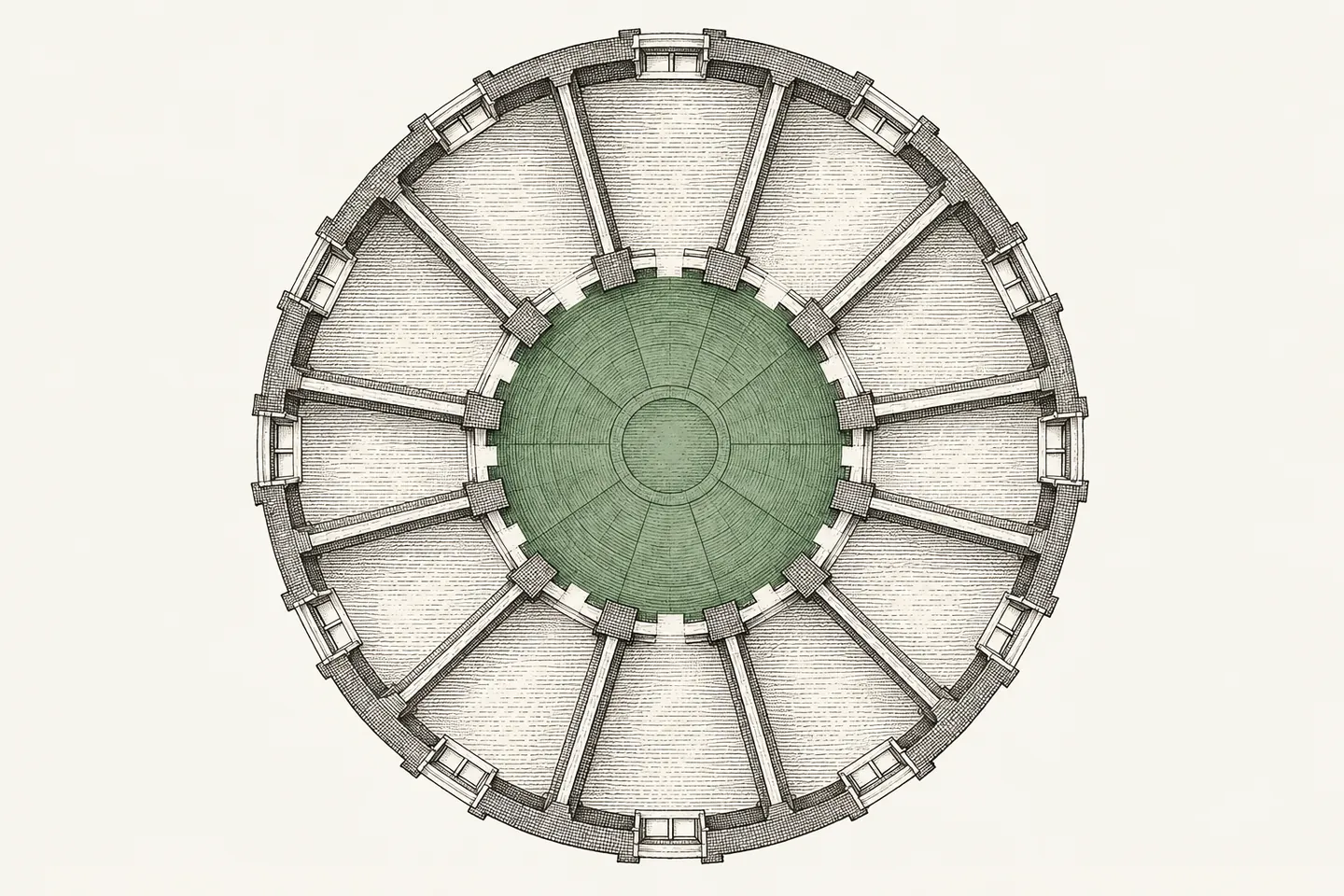
Plate 1. The twelve houses
| House | Number | Kind | Natural sign |
|---|---|---|---|
| 1st House | 1 | Angular | Aries |
| 2nd House | 2 | Succedent | Taurus |
| 3rd House | 3 | Cadent | Gemini |
| 4th House | 4 | Angular | Cancer |
| 5th House | 5 | Succedent | Leo |
| 6th House | 6 | Cadent | Virgo |
| 7th House | 7 | Angular | Libra |
| 8th House | 8 | Succedent | Scorpio |
| 9th House | 9 | Cadent | Sagittarius |
| 10th House | 10 | Angular | Capricorn |
| 11th House | 11 | Succedent | Aquarius |
| 12th House | 12 | Cadent | Pisces |
Plate 2. Every page
The twelve houses, one by one
1st House
The 1st house covers the self in daily life, from appearance and first impressions to the way you begin. Its position at the Ascendant places it below the horizon, in the chart’s eastern half.
1st House in detail2nd House
The 2nd house concerns income, possessions, and what you value. Its place opposite the 8th house links personal resources with shared ones, while planets there add their own themes.
2nd House in detail3rd House
The 3rd house covers everyday exchange: conversation, nearby people, short journeys and learning. Its axis with the 9th house links local knowledge with wider horizons.
3rd House in detail4th House
The 4th house describes home, family, roots, and the private base you return to. Its place opposite the 10th house connects the care of private life with public roles.
4th House in detail5th House
The 5th house describes where creativity, play, romance, pleasure, children, and self-expression may find room in everyday life. Its axis connects personal creativity with shared hopes.
5th House in detail6th House
The 6th house brings chart themes into everyday work, useful routines, service, and care for health habits. Its axis with the 12th house links practical duties with time for withdrawal.
6th House in detail7th House
The 7th house describes close partnerships and direct encounters with others. Its position at the Descendant places these themes across the chart from the 1st house of self.
7th House in detail8th House
The 8th house centers on shared money, intimacy, and what is kept private or held in common. Its place opposite the 2nd house links shared resources with what belongs to you.
8th House in detail9th House
The 9th house points to big-picture questions in ordinary life, from study and travel to belief and law. Its place opposite the 3rd house links broad horizons with daily learning.
9th House in detail10th House
The 10th house links work, public standing and long-term aims with the private foundation represented by the 4th house. Its chart position and any planets there add context.
10th House in detail11th House
The 11th house links everyday friendships and group life with hopes for the future. Its place opposite the 5th house sets shared aims alongside personal creativity.
11th House in detail12th House
The 12th house is linked with solitude, rest, retreat and experiences that are hard to name. Its place opposite the 6th house connects withdrawal with daily service and routine.
12th House in detail
How the houses are grouped
The houses also form three groups, based on their position in the chart. Angular houses are 1st, 4th, 7th, 10th; they tend to be read as active points of focus. Succedent houses are 2nd, 5th, 8th, 11th; they are associated with building, holding, or developing what is present. Cadent houses are 3rd, 6th, 9th, 12th; they can be read as areas of adjustment and change. These are broad symbolic themes, not promises about events.
Birth details and house systems
The Ascendant marks the starting point for numbering the houses. Because it depends on the exact time and place of birth, those details shape where the houses fall in a chart. A house system decides exactly where each house begins, so different systems can place the boundaries differently. The calculator’s houses mode and the house systems guide cover how those choices work. The house pages below explore each area in turn.
Questions
Why does my birth time matter for the houses?
The birth time helps determine the Ascendant, which marks the starting point for numbering the houses. A change in the recorded time may shift house boundaries or placements. For a chart that reflects your birth details, use the most accurate time you have, while keeping in mind that house placement is part of a symbolic reading.
Can two people have different house placements?
Yes. Houses depend on birth time and place, so people born at different times or locations may have different house placements. The chosen house system also sets the boundaries. Astrology treats these placements as a symbolic way to reflect on life areas, rather than proof that people must experience them in a particular way.
What does a house system change in a chart?
A house system determines where each house begins and how the chart is divided into houses. Different systems can draw those boundaries differently, which may change where a planet or point is placed by house. The calculator’s houses mode and the house systems guide explain these options and their use.
Are the houses the same as zodiac signs?
No. Houses are areas of life in a chart, while zodiac signs describe styles of expression in astrology. A house and a sign can be considered together when reading a chart, but they are not interchangeable. Both are symbolic tools for reflection, not evidence or fixed statements about what must happen.