Planets in a birth chart
Planets in a birth chart are read as basic drives or functions in a symbolic picture of a person. The Sun and Moon are the luminaries; Mercury, Venus and Mars are personal planets; Jupiter and Saturn are social planets; Uranus, Neptune and Pluto are outer planets. A planet’s sign, house and aspects colour its meaning.
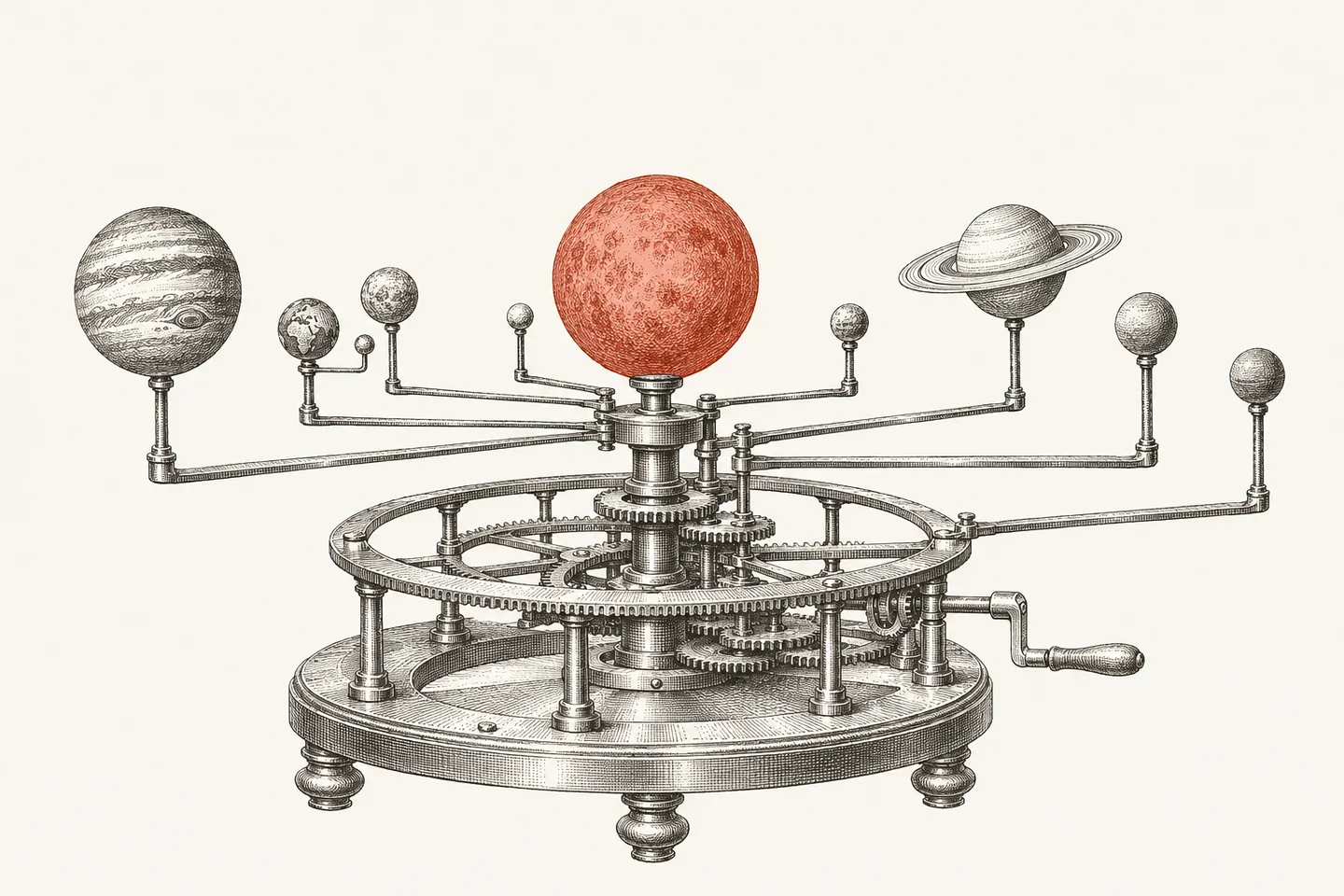
Plate 1. The ten planets
| Planet | Symbol | Kind | Rules |
|---|---|---|---|
| Sun | Luminary | Leo | |
| Moon | Luminary | Cancer | |
| Mercury | Personal planet | GeminiVirgo | |
| Venus | Personal planet | TaurusLibra | |
| Mars | Personal planet | Aries | |
| Jupiter | Social planet | Sagittarius | |
| Saturn | Social planet | Capricorn | |
| Uranus | Outer planet | Aquarius | |
| Neptune | Outer planet | Pisces | |
| Pluto | Outer planet | Scorpio |
Plate 2. Every page
The ten planets, one by one
Sun
In astrology, the Sun marks identity, vitality and purpose. Its steady path through the zodiac and its special place in the traditional dignity scheme give it a distinct role in a birth chart.
Sun in detailMoon
The Moon points to feelings, needs, habits and comfort in a birth chart. Its quick movement, changing phases and traditional sign dignities give it a distinct place among the chart’s bodies.
Moon in detailMercury
Mercury describes how a chart handles thought, speech, learning, and everyday information. Its close path around the Sun gives it a distinctive place among the planets and a short, recurring retrograde cycle.
Mercury in detailVenus
Venus describes what draws you in, what you value, and how you show affection. Its place in the zodiac offers a traditional picture of ease and strain, while its sky cycle gives it a distinct rhythm.
Venus in detailMars
Mars describes the push behind action, desire and anger. Its red appearance, sign dignities and occasional retrograde periods give this personal planet a distinctive place in astrology.
Mars in detailJupiter
Jupiter is linked with growth, belief and the search for meaning. Its place in the sky and its traditional sign dignities offer clues to how this expansive drive may be expressed.
Jupiter in detailSaturn
Saturn is associated with the effort of building lasting structure. Its slow path through the zodiac and its traditional sign dignities give astrologers a language for discussing patience, limits and responsibility.
Saturn in detailUranus
Uranus is associated with change, independence and fresh ideas. Its slow orbit links each sign to a broad generational tone, while its unusual tilt and yearly retrograde add distinctive features to its place in astrology.
Uranus in detailNeptune
Neptune is linked with imagination, compassion and ideals. Its slow path through the zodiac and annual retrograde periods give it a broad, gradual role in astrological interpretation.
Neptune in detailPluto
Pluto is linked with deep change, power, endings and renewal. Its long, tilted orbit keeps it in each sign for years, while its yearly retrograde lasts about five months.
Pluto in detail
Planet groups show broad scope
The planet groups offer a simple way to approach the chart. The Sun and Moon are the luminaries. Mercury, Venus and Mars are the personal planets. Jupiter and Saturn are the social planets, while Uranus, Neptune and Pluto are the outer planets. These labels describe broad areas of life and experience, not fixed traits or predictions.
Context shapes each meaning
A planet’s meaning is read through its place in the chart. Its sign colours how its basic function may be expressed. Its house points to an area of life where that function may be more noticeable. Aspects describe how it connects with other chart factors. Reading these together can give a fuller picture than treating a planet as a standalone label.
Use the planet pages to explore each symbol in turn. Start with the planet, then consider its sign, house and aspects in your chart. The pages explain the themes associated with each planet, so you can use them as starting points for reflection rather than as proof or prediction.
Questions
What does a planet represent in a birth chart?
A planet is read as a basic drive or function in a symbolic chart. Its meaning can point to a kind of experience or response. The sign, house and aspects add context, so the planet is best understood as part of the whole chart.
Why do astrologers group planets into different categories?
The groups give a broad sense of scope. The luminaries are the Sun and Moon; the personal planets are Mercury, Venus and Mars; the social planets are Jupiter and Saturn; and the outer planets are Uranus, Neptune and Pluto. These categories help organize the chart’s symbols.
Can the same planet mean different things in different charts?
Yes. A planet’s core function stays central, but its sign, house and aspects shape how it may be expressed. Its placement can therefore be read differently from chart to chart, without treating either reading as a certain description of a person.
How should I use the planet pages with my chart?
Read the page for a planet in your chart, then look at its sign, house and aspects for more context. Take the themes as starting points for reflection. They offer a symbolic way to think about experience, not a prediction or a complete account of anyone.