Moon in the birth chart
In a birth chart, the Moon is a luminary associated with feelings, needs, habits, comfort, memory and what helps you feel secure. Its sign can describe the style of those needs. Astrologers also consider its traditional dignity and its place in the sky, where it moves quickly and cycles through changing phases.
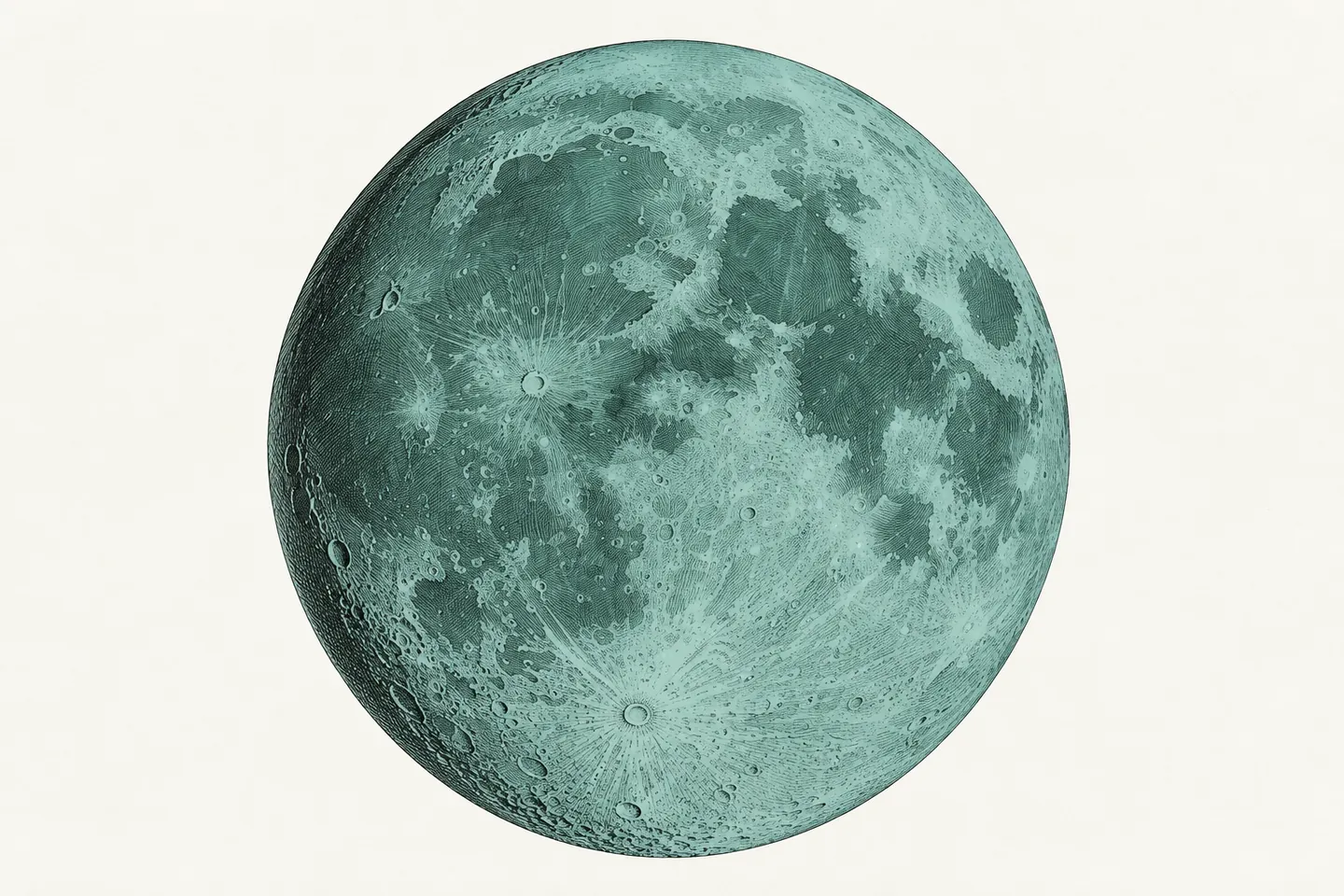
Moon at a glance
- Symbol
- Moon
- Kind
- Luminary
- Rules
- Cancer
- Time in a sign
- 2.3 days
- Shortest to longest stay
- 2 days to 2.5 days
- Retrograde
- Never
- Turns a year
- Never
Cycle figures computed on November 9, 2026. The site's own ephemeris series, sampled every 6 hours from 2000-01-01 to 2099-12-31 (16041 complete stays in a sign). A stay runs from the first time the body reaches a sign's start to the first time it reaches the next sign's start, so a retrograde step back over a border is part of the stay. Retrograde means the ecliptic longitude is falling between two samples.
The Moon in the sky
The Moon is a luminary, alongside the Sun, and the fastest body in the chart. It circles the zodiac in about 27.3 days, so its sign changes more often than those of the other chart bodies. Astrologers connect this quick pace with immediate responses, familiar habits and needs that can shift with daily experience.
Its phases repeat about every 29.5 days, moving through new, waxing, full and waning phases. These visible changes give the Moon a distinctive rhythm in the sky. In astrology, the phases offer a way to think about cycles of feeling and attention, while the Moon’s core meanings remain comfort, memory and emotional security.
Traditional sign dignities
In the traditional scheme, the Moon is at home in Cancer and exalted in Taurus. It is in detriment in Capricorn and in fall in Scorpio. These terms describe whether a planet’s usual drive is thought to have familiar or more difficult conditions. They are interpretive ideas, not measures of a person’s worth or emotional ability.
The Moon’s drive for security can look different in these signs. In Taurus, its exaltation, comfort may come through steady routines and practical care. In Scorpio, its fall, the same need may show as intense privacy and a search for reassurance.
Needs in ordinary life
In daily life, the Moon is associated with what feels familiar, how a person seeks comfort and the habits that support a sense of safety. Its sign can color these patterns: a Cancer Moon may tend to protect and nurture, while a Gemini Moon may seek comfort through talk, curiosity and variety. These are ways to describe tendencies, not fixed traits.
The Moon never turns retrograde; it always moves forward through the signs. Its phases offer a more fitting way to describe its changing rhythm: new, waxing, full and waning repeat about every 29.5 days. Astrologers may use that cycle to consider shifts in attention and feeling. The phases do not establish events or prove what someone feels.
Questions
Why does the Moon change signs more often than other planets?
The Moon is the fastest body in the chart and circles the zodiac in about 27.3 days. That short cycle means it moves through the signs more often than the other chart bodies. Its rapid movement is one reason astrologers associate it with immediate feelings and familiar habits.
What is the difference between the Moon’s zodiac cycle and its phases?
The Moon circles the zodiac in about 27.3 days. Its phases, new, waxing, full and waning, repeat about every 29.5 days. The two cycles describe different things: one tracks the Moon’s path through the signs, while the other describes its changing appearance in the sky.
Why is the Moon considered at home in Cancer?
In traditional astrology, Cancer is the sign the Moon rules, so it is described as being at home there. The Moon’s associations with care, comfort, memory and emotional needs fit Cancer’s protective, nurturing manner in this scheme. This is an interpretive convention, not a measure of personal strength.
Can the Moon ever be retrograde in a birth chart?
No. The Moon never turns retrograde; it always moves forward through the signs. Its phases provide a different way to describe change, repeating from new through waxing and full to waning about every 29.5 days. Astrologers may use this cycle as a lens for reflection, not as a prediction.
Find your Moon
Enter your birth details to see Moon in your chart: its sign, its house and whether it is retrograde.
Plate 1. Birth details
Example chart: 15 June 1990, 14:30, London (an invented birth, not a real person)
Plate 2. Find yours
Moon in the example chart
This is the example chart. Enter your details above to see yours.
- Sign
- Pisces
- Degree
- 16°11'
- House
- 5th house
- Motion
- Direct
In sign
Moon in Pisces
You may absorb the mood around you, with imagination and compassion shaping what feels comforting. Quiet time can help you notice your own needs, though unclear boundaries may make it harder to tell them apart from others’.
In house
Moon in the 5th house
Play, creative work, and affection are often places where your feelings seek expression. The Moon can show up as warmth and delight in sharing what you make, with changing moods sometimes making it harder to stay with one activity.